1851
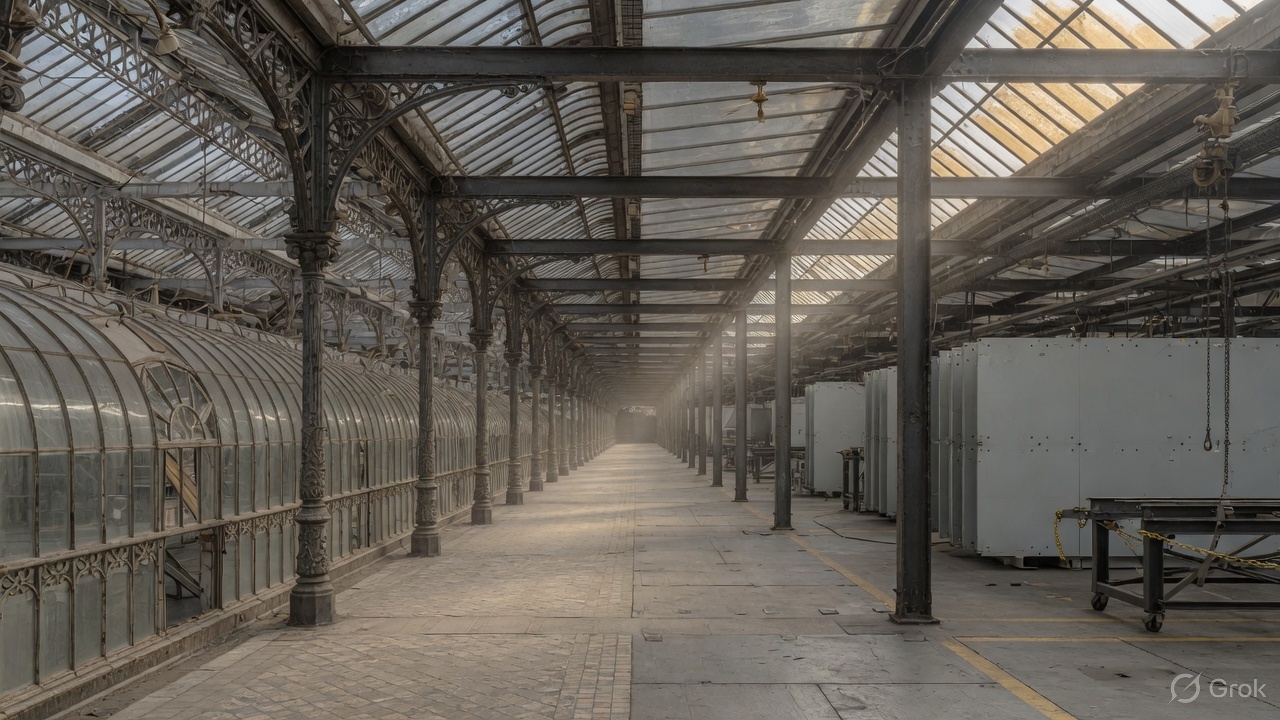
Crystal Palace
Iron-and-glass kit assembled at speed from manufactured parts. Prefabrication as spectacle and system.
Supported
Lineage
Not a generic construction-history timeline. Evolutionary branches: early prefabrication, state industrialisation, Japanese productisation, Chinese system scale, Singapore governance, contemporary convergence.
From kit to factory to governed system.
Early prefabrication
1851
Iron-and-glass kit assembled at speed from manufactured parts. Prefabrication as spectacle and system.
1900s–1920s
Transportable kits and mail-order houses. Construction begins to leave the site as a parts list.
1916–1940s
Emergency shelter as repeatable manufactured geometry. Speed and logistics dominate craft.
1940s–1950s
Temporary housing programmes. Many were more temporary in rhetoric than in occupation.
State industrialisation
1950s–1980s
Standardised apartment construction as a state industrial product. Scale without productisation.
Japanese productisation
1950s–1960s
Shortage as trigger. Manufacturers, not only builders, take the housing problem.
1960s–1980s
Steel systems, proprietary platforms, factory QA. Construction becomes a product with aftercare.
1980s–
Repeatable structure, variable finish. The catalogue, not the unique drawing, is the asset.
Chinese industrialisation
1950s–1970s
Panel construction enters as industrial policy, not as a housing brand.
1980s–2000s
Urbanisation at system scale. Precast, steel and component plants proliferate.
2010s–
Central industrial policy plus advanced manufacturing. Capacity announcements require utilisation evidence.
Singapore governance
1960s–
Public housing as the client that can industrialise a city-state.
2000s
Measurement enters procurement. Industrialisation becomes a scored obligation.
2010s–
Prefabricated MEP, volumetric construction and digital delivery as one policy stack.
Contemporary convergence
2000s–
The drawing becomes a coordinated manufacturing information model — when it is actually used as one.
2020s–
Evidence is supposed to travel with the component. MMC Gateway is the Australian-facing expression of that idea.
2020s–
Automation is a factory fact in some plants and a slide in others. Sentinel will distinguish them.
1977–2011
North Queensland civil and construction-materials group. Receivers 2011. Historic capacity, not a housing factory.
2010s–
Oceania modular and camp product with reported Chinese fabrication. Held as a historic case, not verified Australian plant throughput.